
Wound Healing Spray for Animals

Wound Healing Spray For Animals – Vetraise Remedies’s Inji-heal Spray
Wound healing in animals is crucial for their overall health and well-being. Whether it’s a pet, livestock, or a working animal, timely care can prevent infections and promote faster recovery. Wound healing sprays are becoming a preferred solution due to their ease of use, efficacy, and broad-spectrum protection. This guide delves into the importance of wound healing sprays for animals, the best products, their benefits, and answers frequently asked questions about them.
What is a Wound Healing Spray for Animals?
A wound healing spray is a topical solution designed to accelerate the healing of cuts, abrasions, burns, and other injuries in animals. These sprays are easy to apply, pain-free, and often contain antiseptic, anti-inflammatory, and skin-regenerating properties.
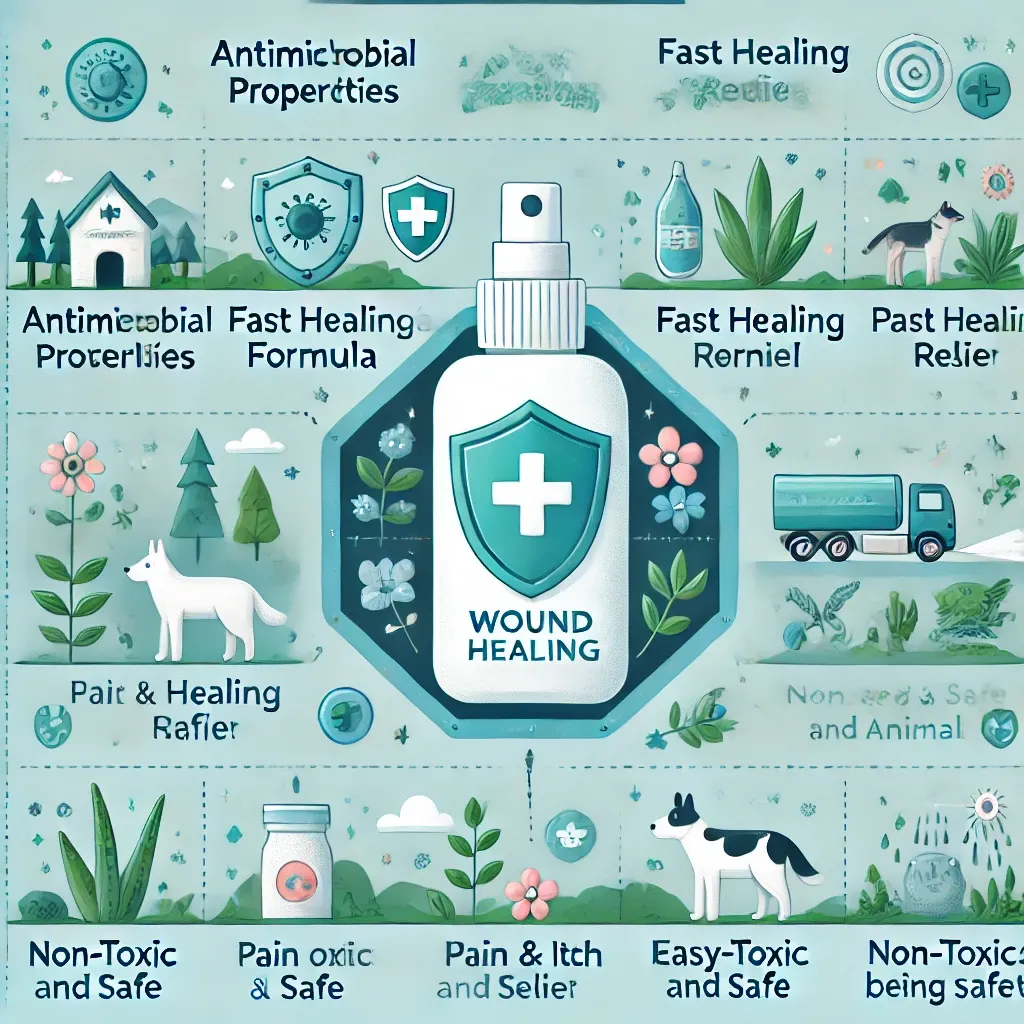
Key Features of an Effective Wound Healing Spray
- Antimicrobial Properties
- Prevents bacterial, fungal, and viral infections.
- Key ingredients: Chlorhexidine, Silver Nitrate, or Povidone-Iodine.
- Fast Healing Formula
- Promotes cellular regeneration for quicker wound recovery.
- Includes ingredients like Aloe Vera, Turmeric Extract, and Allantoin.
- Pain and Itch Relief
- Reduces irritation, itching, and discomfort for animals.
- May contain soothing agents like Tea Tree Oil or Lidocaine.
- Non-Toxic and Safe
- Free from harmful chemicals, making it safe even if licked by the animal.
- Easy Application
- Spray format ensures even coverage and minimizes contact with the wound, reducing pain during application.
Benefits of Wound Healing Spray for Animals
- Convenience
- Portable, easy to store, and ready-to-use solutions.
- Sterile Application
- Reduces the risk of introducing additional bacteria to the wound.
- Quick Action
- Ensures rapid disinfection and promotes natural healing.
- Multi-Species Use
- Suitable for various animals, including cats, dogs, horses, cattle, and poultry.
- Cost-Effective
- Long shelf-life and multiple applications per bottle.
Top Wound Healing Sprays for Animals
Vetraise Remedies’s Inji-heal Spray
- Ideal for all animal types, including pets and livestock.
- Known for fast-acting antibacterial and antifungal protection.
Himalaya Scavon Veterinary Spray
- Contains herbal extracts like Neem and Turmeric for natural wound healing.
Sofskin Wound Healing Spray
- Offers broad-spectrum antimicrobial protection with pain-relieving properties.
Povidone-Iodine Spray
- Effective for treating infected wounds and burns.
Silver Shield Spray
- Infused with silver ions for advanced microbial protection and faster recovery.
How to Use a Wound Healing Spray
- Clean the Wound
- Rinse the area with clean water or saline to remove debris.
- Shake the Spray Bottle
- Ensure even distribution of the solution.
- Apply Generously
- Spray directly over the wound, covering the affected area thoroughly.
- Allow to Air Dry
- Do not bandage unless recommended by a veterinarian.
- Repeat as Directed
- Follow the product’s instructions for reapplication frequency.
Market Trends in Wound Healing Sprays for Animals
- Growing Preference for Herbal Formulations
- Consumers are opting for sprays with natural ingredients for safer, eco-friendly care.
- Increased Awareness of Animal Healthcare
- Rising pet ownership and livestock management practices have boosted the demand for quality wound care solutions.
- Technological Advancements
- Use of nanotechnology, such as silver nanoparticles, for superior antimicrobial action.
Tips for Effective Wound Care in Animals
- Monitor Progress
- Keep an eye on the wound for redness, swelling, or discharge.
- Keep the Area Clean
- Prevent dirt and contaminants from worsening the injury.
- Provide Proper Nutrition
- A balanced diet supports faster wound healing.
- Limit Movement
- Encourage rest to avoid reopening the wound.
Conclusion
Wound healing sprays for animals are a game-changer in veterinary care, offering quick, painless, and effective solutions for managing injuries. Whether you’re a pet owner or a livestock farmer, having a trusted wound healing spray on hand can save time, reduce stress, and ensure your animals recover swiftly.

By choosing a reputable brand and following proper application guidelines, you can significantly enhance your animal’s recovery process. For severe injuries or delayed healing, always consult a veterinarian.
Contact Information
If you are interested in getting any query or details regarding Wound Healing Spray for Animals, then you can contact us on below information.
- Company Name: Vetraise Remedies
- Company address: Plot no 295, industrial area Phase- 2, Panchkula, 134109, Haryana (India)
- Phone: +91- 90236- 39358, +91- 98153- 05791, +91- 86990- 39359
- Website : www.vetraiseremedies.com
- Email : vetraiseremedies@gmail.com
FAQs About Wound Healing Spray for Animals
Related articles
- Animal Medicine PCD Franchise Companies 4 min read
Vet products Manufacturers & Suppliers
Choose the Best Vet products Manufacturers & Suppliers in India: Vetraise Remedies Vet products Manufacturers & Suppliers- Vetraise Remedies is the Best Vet products Manufacturers & […]
Read More : Vet products Manufacturers & Suppliers